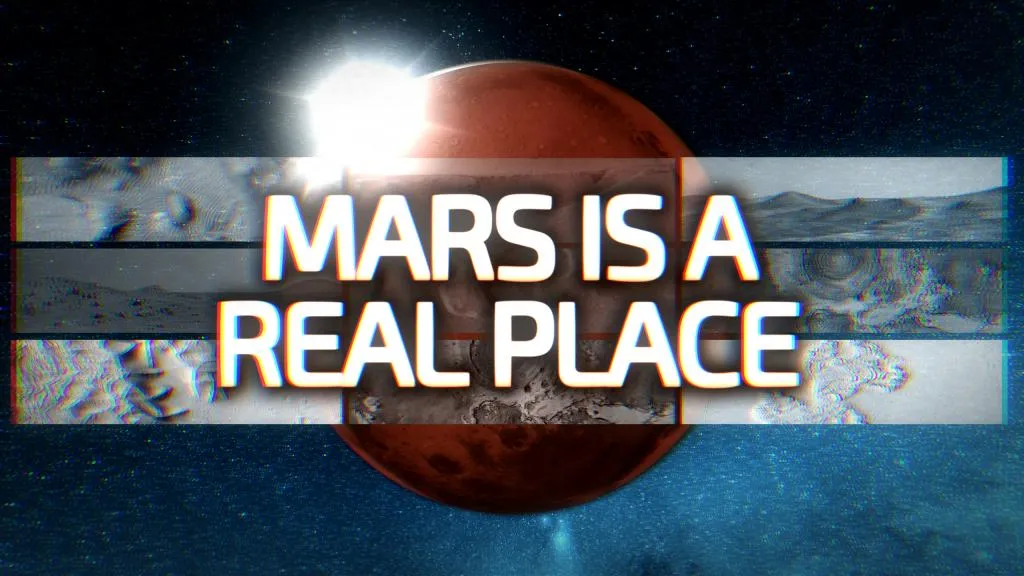
Mars Is A Real Place
Gear VR · March 2015
A short, immersive, and musical visit to the Martian surface, built from real imagery.
This is the story of how one developer's personal curiosity about the scale of the universe became Titans of Space.
The idea sparked on a long drive. Drash was taking his wife and her friends toward Vancouver, and with the conversation around him happening in a language he doesn't speak, his mind drifted out across the landscape. Somewhere in that open stretch of road, the promise of VR connected to a memory from childhood: Voyage to the Outer Planets and Beyond, a documentary that paired Voyager imagery with Gustav Holst's music, hosted by Isaac Asimov. He had another week of travel to think about it before he could get home and start building.
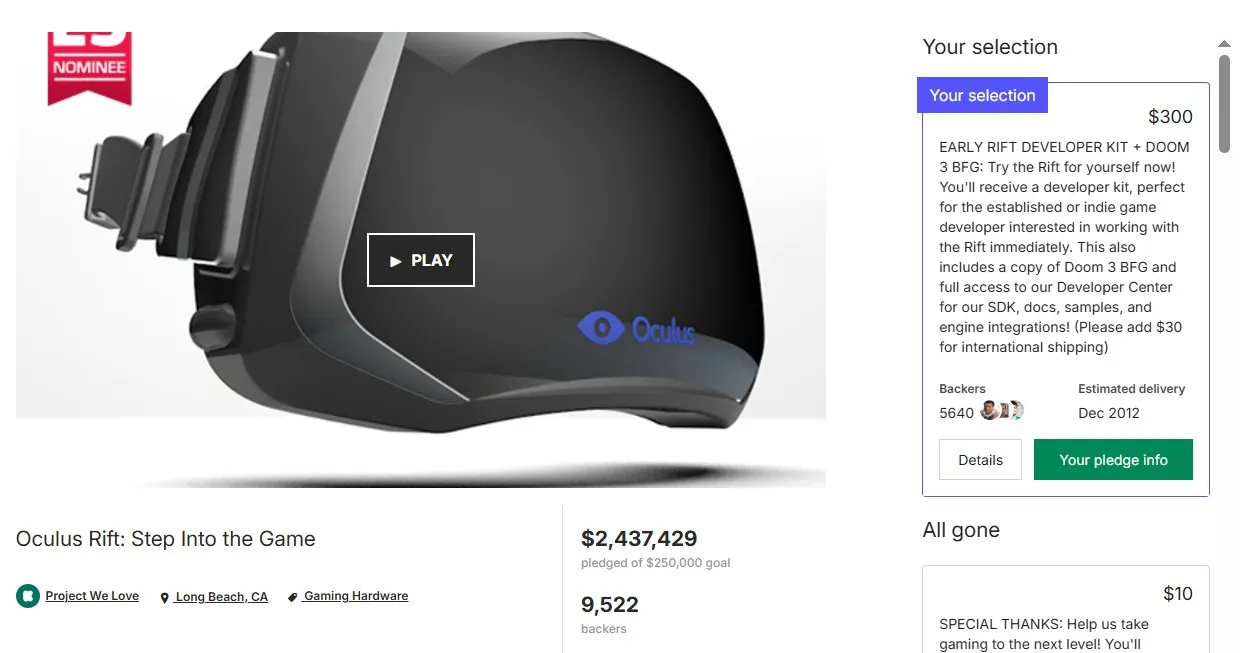
Drash was already a seasoned software engineer when he backed the Oculus Rift DK1 on Kickstarter. As one of the last backers, it took months for the headset to arrive, and during that wait his mind kept racing with ideas for what to build. He'd spent years fascinated by those internet infographics comparing the Sun to giant stars, images that made him marvel at his own insignificance. He wanted to step inside that feeling, not just look at a flat picture of it.
Despite being an experienced engineer, this was his first time working with the Unity game engine. What started as something he wanted to do for himself became Titans of Space.
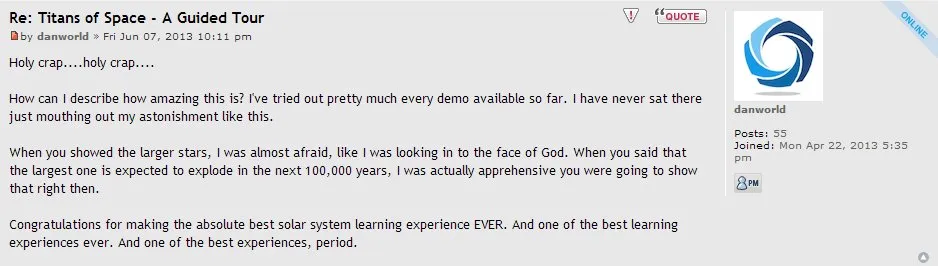
The initial release of Titans of Space on the Oculus forums was the day Drash realized that many others shared his drive to experience space in an immersive way. Feedback was immediate and plentiful, beginning the long journey of improving the experience to satisfy as many requests as possible.
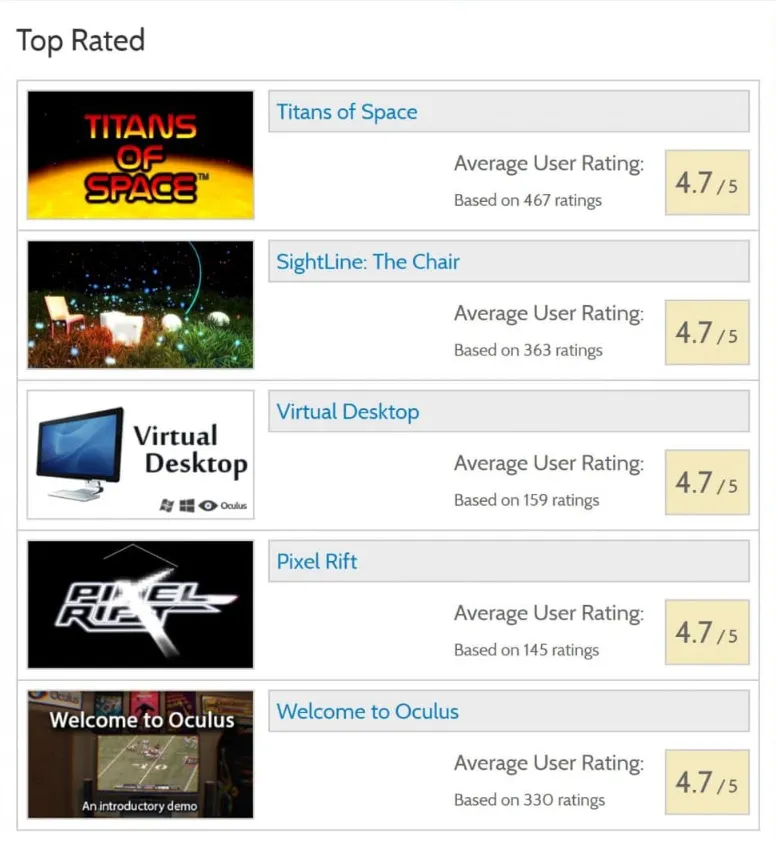
A pivotal moment came when the app was initially rejected from Oculus Share, the earliest version of today's Meta Horizon Store. The reviewer spotted visual artifacts where the asteroids were. Rather than being discouraged, Drash saw it as a reason to raise the quality bar. He resubmitted, and the app went on to become the #1 top-rated experience on the entire Oculus Share platform.
Throughout all of this, Drash kept a regular day job, building Titans of Space during nights, evenings, and weekends. He calls it a "glorious hobby." If he hadn't had the stability of that day job, he might have stopped when commercial viability was uncertain. But the pull of "stepping into something that you create" kept him tinkering - a feeling that many VR developers know very well.
Things snowballed as new hardware arrived. Each VR generation pushed Drash to adapt and keep the experience moving forward: from DK1 to DK2, to consumer PC VR headsets like Rift and Vive, and mobile headsets like Gear VR, Oculus Go, and Quest. After reaching 33,000+ downloads for devkits on Oculus Share, that number grew to well over than one million downloads for the free Gear VR version, later known as 'Titans of Space Classic'.
Word spread further than the numbers show. People around the world wanted to share it with friends and family, so they offered translations, and Titans of Space became localized almost out of the gate. Drash later paid professional translators to fill the gaps and add new languages. Emails and messages arrived from teachers showing it to their students, sometimes with photos and videos of classrooms exploring the Solar System.
The release of the Oculus/Meta Quest brought wonderful new technologies - total freedom from wires and external devices, and hand-tracking which brought freedom from controllers too. Titans of Space PLUS released as a Quest launch title with a host of improvements and new features, where it reached a top 4.7 rating.
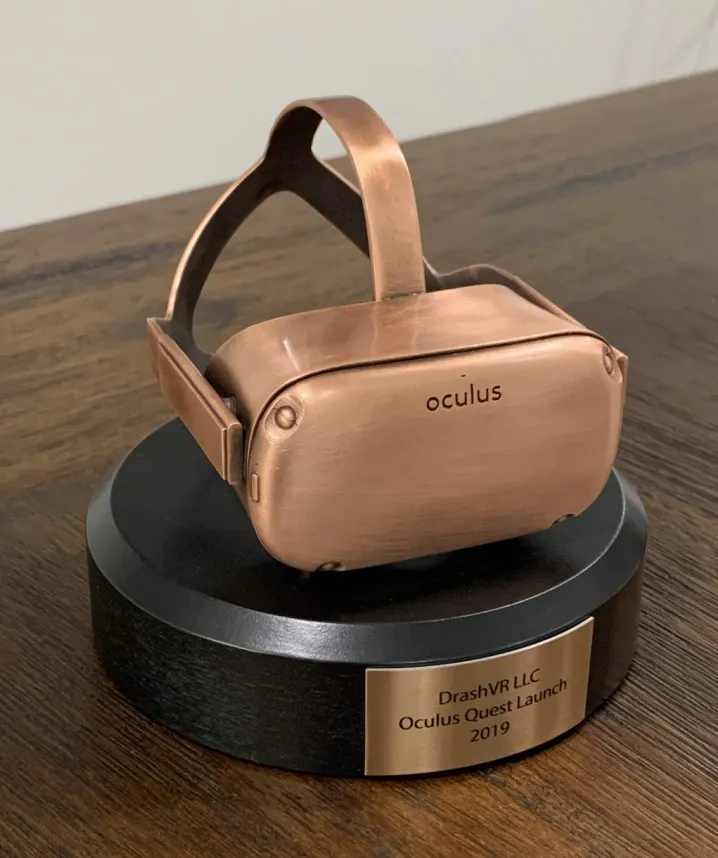
Later on, Titans of Space PLUS was made available for MDM services like ManageXR and ArborXR to make it easy for schools to deploy the app to their classrooms.
Now Drash wants to put Titans of Space PLUS in even more hands. It's coming to iPad and iPhone, so anyone can take the tour, with or without a headset.
Along the way, Drash developed other educational space apps, each one a chance to try something new.
Gear VR · March 2015
A short, immersive, and musical visit to the Martian surface, built from real imagery.
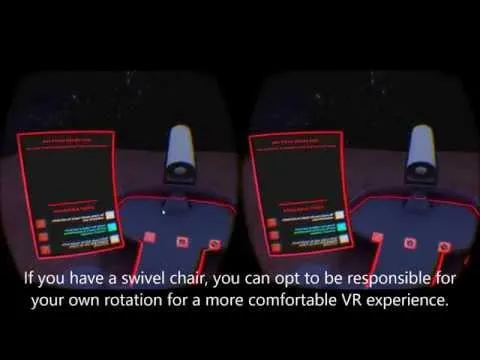
Mobile VR Jam finalist · May 2015
A comfort-first VR experiment, and a Mobile VR Jam finalist - judged by the legendary John Carmack.
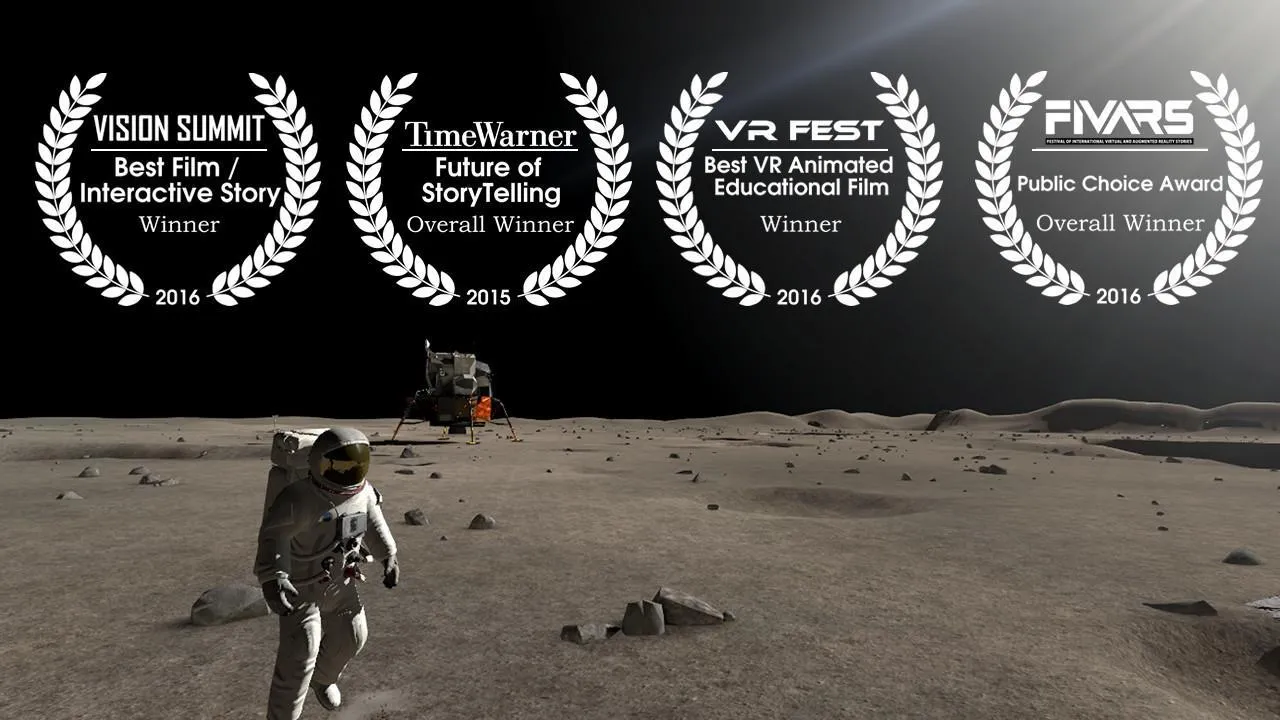
PC VR · April 2016
An award-winning journey to the Moon and back: Vision Summit, Future of StoryTelling, VR Fest, and FIVARS.
Thirteen years of Titans of Space, told through milestones.
Backed the Oculus Rift DK1 on Kickstarter, built in Unity, and launched Titans of Space on the Oculus forums. Rejected from Oculus Share over visual artifacts near the asteroids, resubmitted, and then went on to be the #1 top-rated experience on the platform. It matured across DK2 and tethered PC headsets.
As a Gear VR launch title, the free version (later renamed 'Titans of Space Classic') saw well more than a million downloads. A paid version with voice narration followed on Gear VR, and later Oculus Go. Volunteer translations arrived early, and paid translators filled the rest.
Titans of Space PLUS arrived as a Quest launch title, earning a top spot with 4.7 stars. PLUS added a motion-captured tour guide character to lead the tour in person with ~110 minutes of narrated content, alongside a zero-gravity EVA mode inspired by Echo Arena, and hand-tracking soon after.
The widest-access version yet, with no VR headset required, which suits classrooms with iPads. It offers 12 languages, the full guided tour and the Tour Guide, a new Orbit Mode, and an optional Anaglyph 3D mode that nods to its VR heritage. The deeper VR-dependent modes stay on the headsets.
Titans of Space started as one person wanting to feel the scale of the universe, not just read about it. Everything since has come from sharing that feeling: with students, with teachers, with anyone curious enough to look. The education side was never a plan. It is simply what happened when people kept asking to show it to their classrooms.